Ir al contenido

Producto añadido a la cesta

La cesta está vacía

Seguir comprando

TWENTY YEARS OF CHULA

HISTORY

Founded in 2005 by Diego and Laura, Chula is one of Vietnam’s most distinctive fashion houses. For over two decades, we have remained committed to a transdisciplinary and transcultural approach to creation, bringing together fashion, craft, design, culture, and communities.

1994

Diego Cortizas del Valle and Laura Fontan Pardo met at 21 and 19 respectively, during their university years in Madrid, where Diego studied architecture and Laura political science. Their shared passions for cinema, photography, and music, together with their curiosity and openness to the world around them, brought them together.

Over the following years, they each explored their paths in São Paulo, Rio de Janeiro, Mexico City, Lisboa, and Bisáu before marrying in 2001 in A Coruña, Galicia, where they had both coincidentally spent their summers, and where their father originated.

2003

Newly married, Diego and Laura traveled to Hanoi for the wedding celebration of Laura’s brother. Deeply impacted by the city’s vibrant energy and layered history, they decided to leave their jobs in Santiago de Compostela, Galicia, where they had lived and worked for two years, and move to Hanoi for a sabbatical year.

During that year, they traveled extensively throughout Southeast Asia, learning from the traditions and practices they encountered in each place.

2004

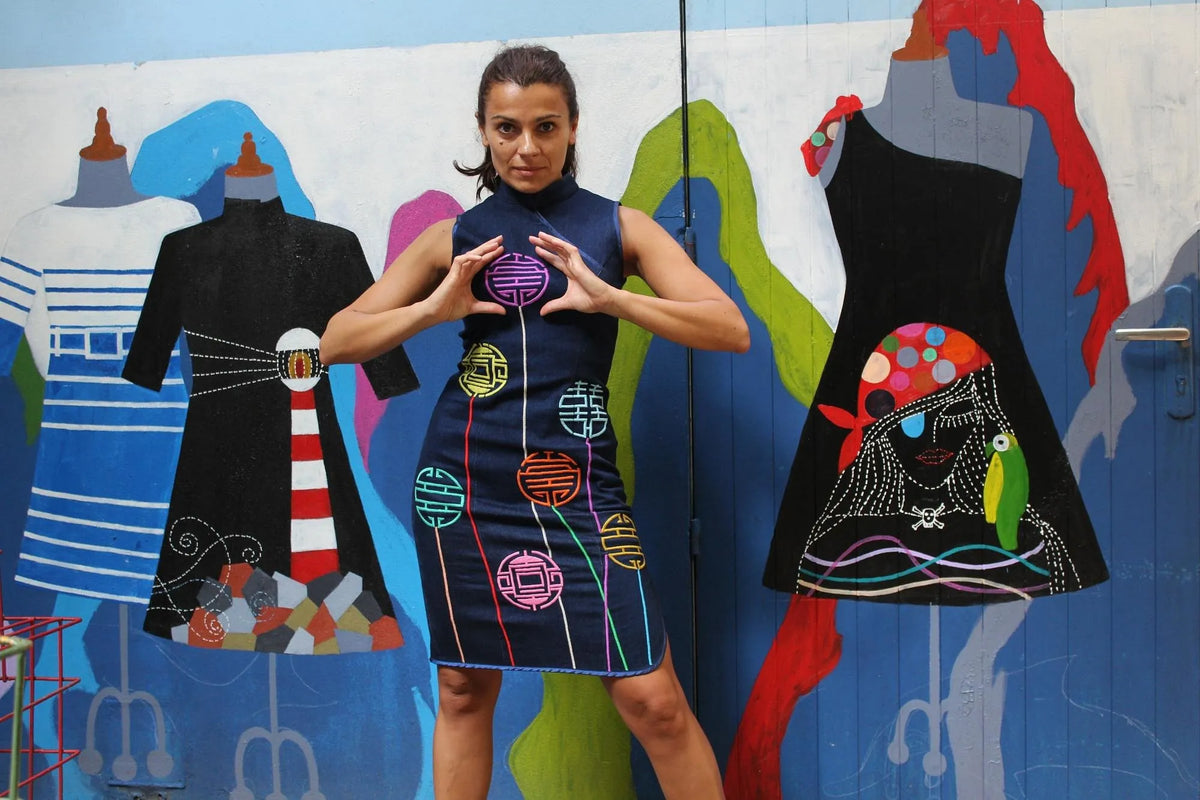
One day, Laura asked Diego to create a design to be painted on a black skirt she wanted tailored for a party, and Diego quickly made dozens of versions. The skirt's popularity led Diego, the following week, to create more than 100 sketches for the skirt, depicting lines, maps, faces, custodian objects, and free-lines, filled with the humor and creativity that would be characteristic of Chula’s early style .

2005

From the sketches and the small tailoring experiments, a fashion house begins to take shape. They call it Chula. The Spanish word sits somewhere between cool, beautiful, and confident, and can describe both a person and an object. It felt like the only name.

The logo comes from an early skirt, a woman drawn in simple lines: wavy hair, a beauty mark, unmistakably Laura.

Chula’s early designs, featuring playful, idiosyncratic skirts, began to be sold at Ipa-Nema, one of Hanoi’s most well-known concept stores, located in the Old Quarter and founded by Cristina Yu.

Known for its original, eclectic handbags and wallets, the store gave Chula its first retail platform and increased visibility.

2006

01 / 05

As demand for their designs grew, Diego and Laura began looking to hire in-house tailors they could collaborate with closely. Through a friend, they were introduced to Hoa Sua, a Vietnamese NGO that provides vocational training and employment opportunities for people with disabilities. Duong, a deaf and non-speaking tailor, became the first member of the Chula family, and continues to work at Chula today.

At the time, neither Diego nor Laura spoke Vietnamese fluently, so learning Vietnamese Sign Language through their team became a natural part of their daily lives. Together, they developed new terms and ways of communicating to address the practical needs of a growing workshop, gradually creating a shared language of their own.

That year also saw the beginning of Chula’s Circles and Lines collection, its first established collection. Characterized by embroidered silk forms and shapes meticulously worked onto silk, the collection introduced a visual language that would become one of Chula’s enduring references.

2007

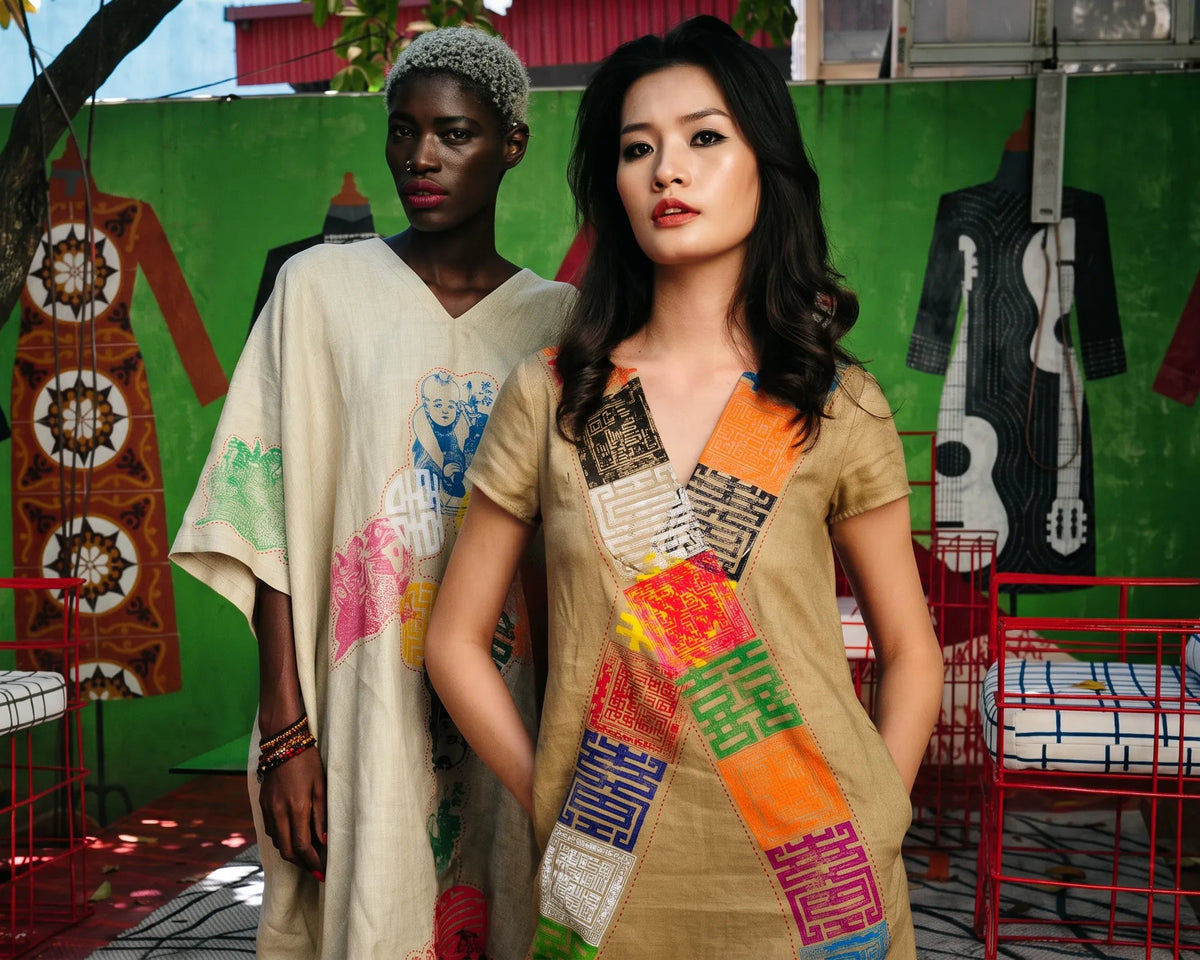
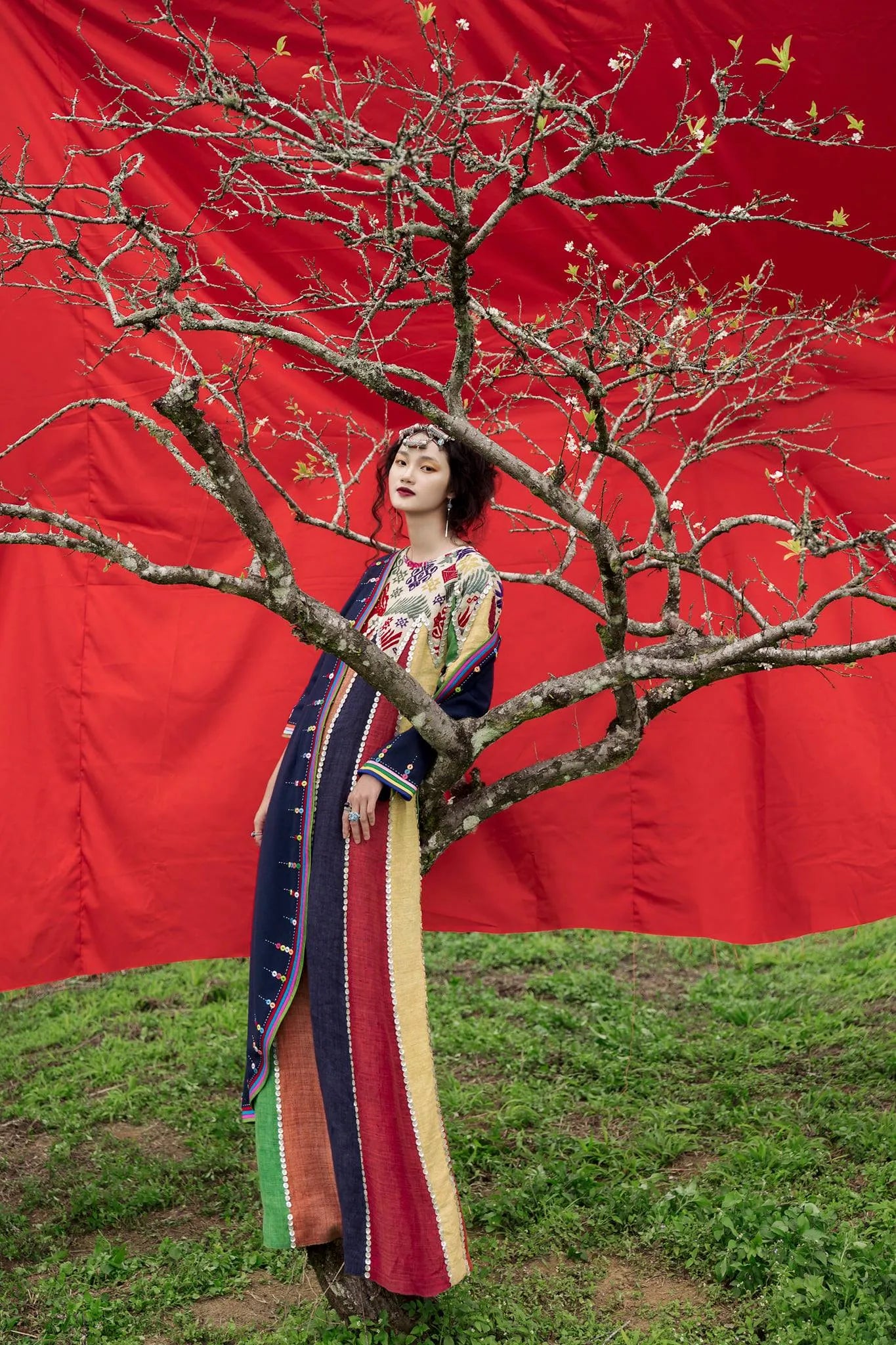
Chula began incorporating textiles from Vietnam’s Mông, Thái, and Cơ Tu communities into silk and taffeta jackets and kimonos, arranging them in patchwork, collage-like compositions. As one of the early fashion brands to bring these traditional textiles into contemporary design, Chula helped introduce them to new audiences and contexts.

By celebrating and reinterpreting these textiles, the brand helped keep these traditions visible while giving them a place in contemporary fashion. Over time, this approach to Vietnamese textile heritage became one of Chula's defining signatures.

2008

Diego and Laura move with their two young children, Carmen and Pablo, into a newly built postmodernist house on Âu Cơ, overlooking the West lake on what was then considered the outskirts of Hanoi.

A series of interconnected rooms and gardens opened onto a long exterior corridor and an expansive balcony, while a narrow tower offered views across the city. The family bedrooms were on the upper level, while the kitchen and living room were downstairs, coexisting with the showroom and reception along the corridor.

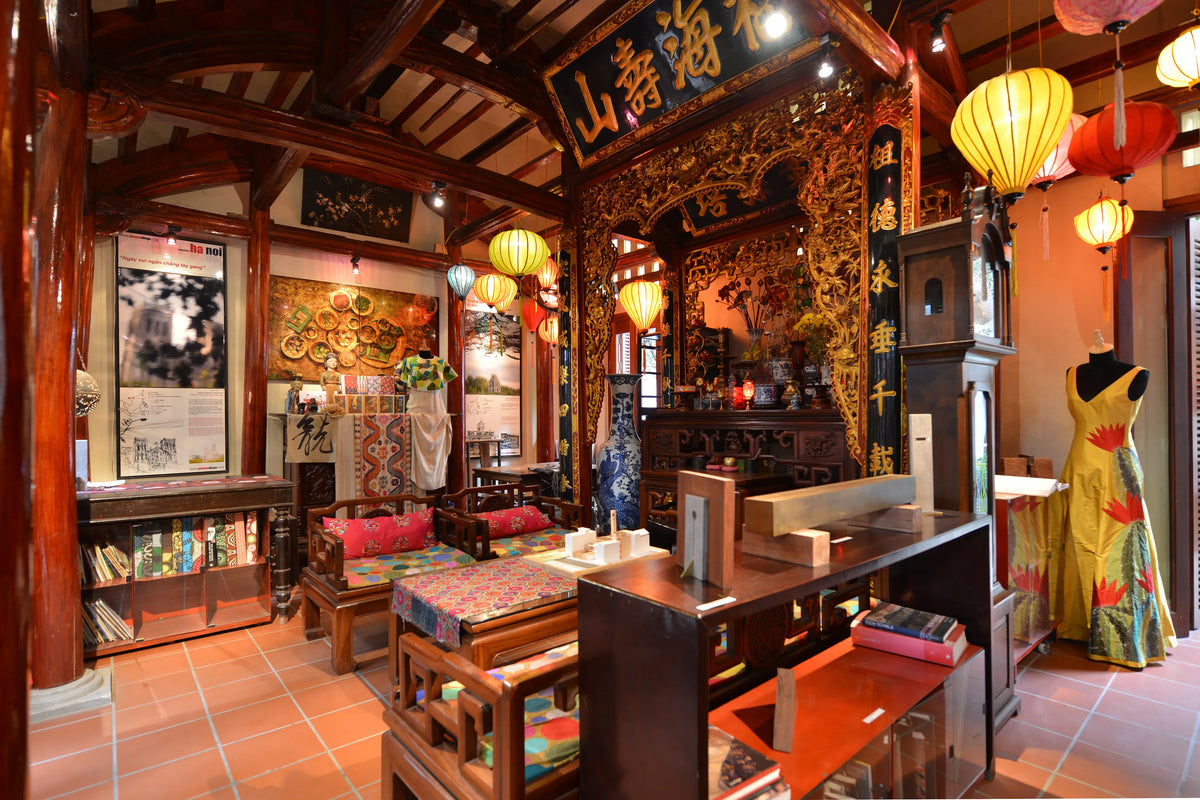
The flexible renting of the house as a home, boutique, and workshop came with an unusual condition from its landlords, who neighboured Chula: they could continue to utilize bàn thờ, a room dedicated to honoring the family’s ancestors. Thus, Chula Tay Ho reflected this embrace of hybridity and co-existence of different functions, making it a space that felt like home to everyone who walked through its doors.

Their first themed collection, entitled The World, was showcased in 2007 in the courtyard of the Vietnam Fine Arts Museum, with each dress denoting a cultural symbol of its respective country. The final piece was a white Ao Dai, embroidered with overlapping red, orange and yellow lines that extended from the collar, converging as they trailed downward before opening up again to subtly evoke the characteristic “S” shape of the country. 

Since then, the Áo Dài becomes a signature garment of the brand, appearing throughout all Chula’s collections. Two decades later, as the Áo Dài continues to evolve in new forms and styles, Chula’s early reinterpretations remain part of its story. 

2009

01 / 05

Suzanne Letch, founder of Art Vietnam Gallery, then Vietnam’s most prominent gallery, had begun collecting Chula’s early dresses when they began to sell in Ipa-Nema. As Diego’s interest in Vietnam’s contemporary art scene grew, he attend one of Suzanne’s exhibition openings at the gallery’s space on 7 Nguyễn Khắc Nhu Street. He introduced himself to Suzanne with an idea, that for each of her future exhibitions, he would create a dress inspired by the artists and works on display.

The proposal marked the beginning of a lasting friendship and creative dialogue between Chula Fashion House and Art Vietnam Gallery. This exchange also marked an important step in Chula’s growing relationship with Vietnam’s contemporary art community. 

2010

The Chula team grew by 50%, and the workshop expanded into the neighboring house. With more space and a growing team, Chula began developing new techniques and expanding its craft practices, with embroidery and hand-painting becoming increasingly important to its creative language.

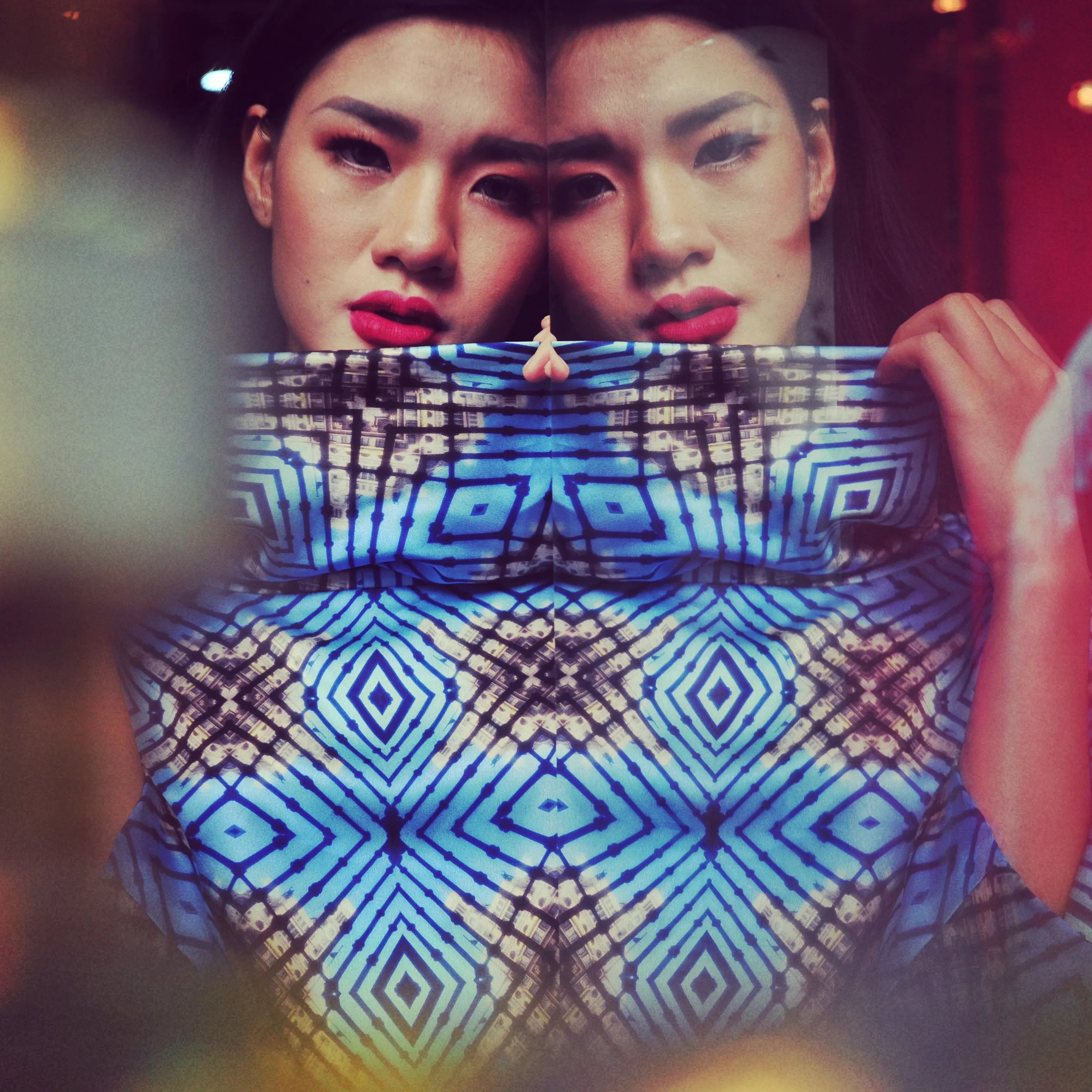
In 2010, Chula hosted the Spanish photographer Miguel Trillo, known for his photographs of the Movida Madrileña, with his exhibition Gigasiapolis – A Portrait of Asian Youth Culture in Asian Megatropolises. During his time in Hanoi, Trillo photographed Vietnamese journalist, cultural media consultant, and Hanoi Grapevine director Uyen Ly wearing Chula’s “Spider is Coming” dress from the Animal Collection, its second themed collection, created the previous year.

The photograph reflects Trillo’s characteristic pop visual language, placing a strikingly pop subject against the everyday setting of the backyard of Chula’s landlords. The encounter captures the dynamism that Hanoi’s cultural scene was beginning to have in the early 2010s, and where Chula was becoming an active participant.

2011

In 2011, Chula is invited to participate for the first time in Vietnam Fashion Week. From then on, it becomes a regular presence on the Vietnamese fashion calendar, as the only foreign-founders fashion brand to participate in every Vietnamese Fashion Week since 2011.

In December, Diego and Laura organized the first Chula Arts Night, bringing together an art exhibition, a musical performance, and a fashion show in a single evening.

The first edition, The Tree Men’s Diary,  featured a fashion show of Chula’s new Flower Collection, a performance by guitarist Phạm Quang Trần Minh, alongside an exhibition of work by Hà Mạnh Thắng, now one of Vietnam’s renowned contemporary artists.

His monumental pop collage The Sunday Ladies (2008) was exhibited in the Chula living room, and Diego and Laura fell so in love with it that, by the exhibition’s conclusion, they decided to acquire it, becoming a staple of Chula ever since. 

Chula’s cultural and artistic spirit also extends beyond its collections. Diego and Laura organise the first Chula Arts Night, bringing different creative disciplines together. The first edition features works by [ARTIST(S)] and a performance by [MUSICIAN(S)], celebrating the dialogue between visual art, music and fashion that has always been at the heart of Chula.

2012

Drawing on his background in architecture, Diego began designing furniture and design objects with the small team responsible for maintaining Chula House. Starting with his own sketches, they fabricated the pieces in-house, often working outdoors in the garden during the day,  transforming familiar elements such as the iconic nón lá hats or birdcages into lamps and furniture.

Often modular and constructed from steel, the pieces were painted in bright colors and designed with an emphasis on openness and lightness.

Some incorporated familiar Vietnamese objects, such as woven baskets and nón lá or birdcages, enclosing lights that illuminated the structures at night. Others combined steel frameworks with textile cushions, bringing together structure, comfort, and Chula’s growing interest in fabric and craft.

These pieces were used throughout the garden, the family home, and Chula's showrooms, gradually becoming part of the distinctive environment of Chula House.

As a result, The Chula Space became increasingly vibrant; Diego painted directly on its walls, creating interventions that responded to Chula’s collections, the time of year, and the events taking place in the space.

2013

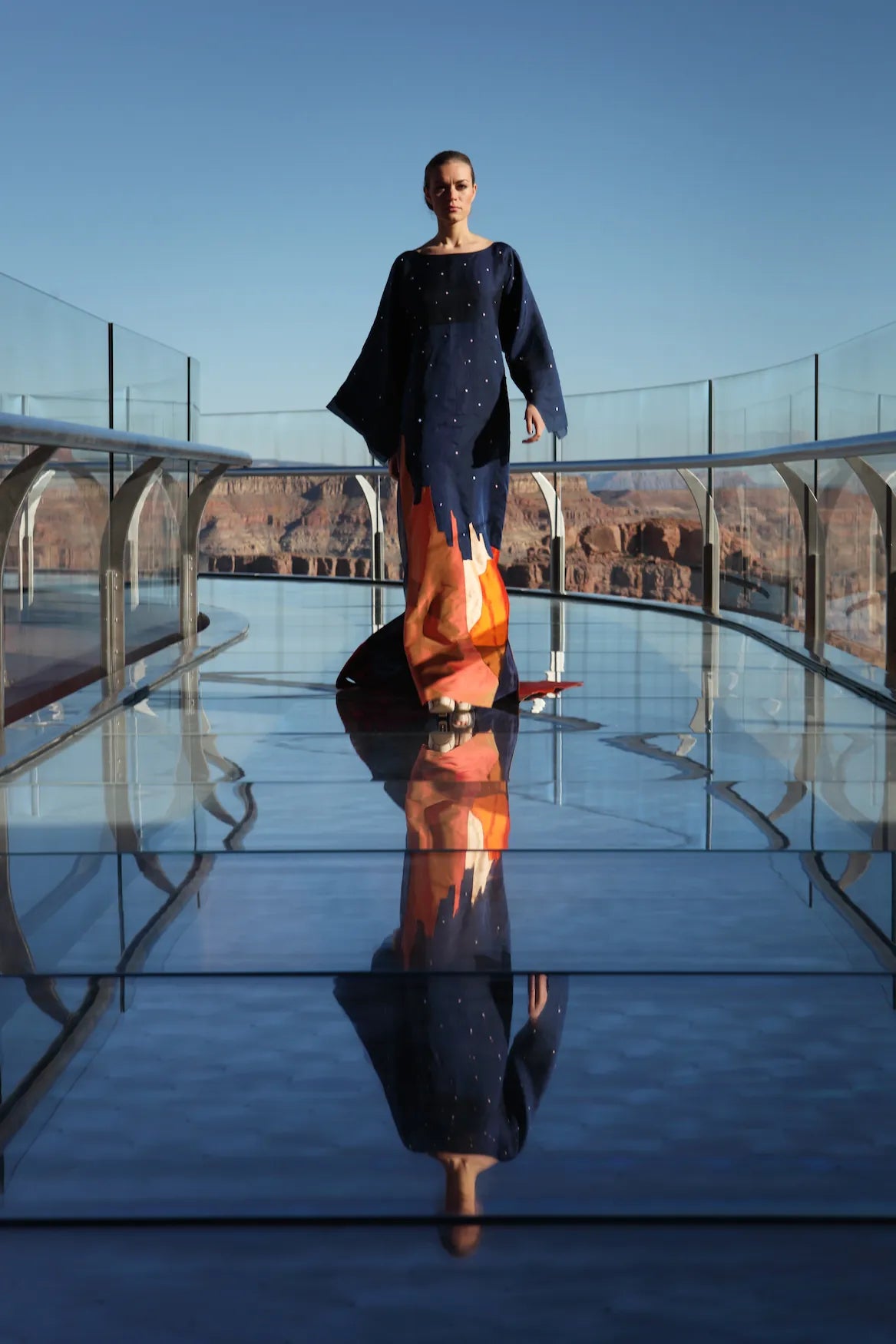
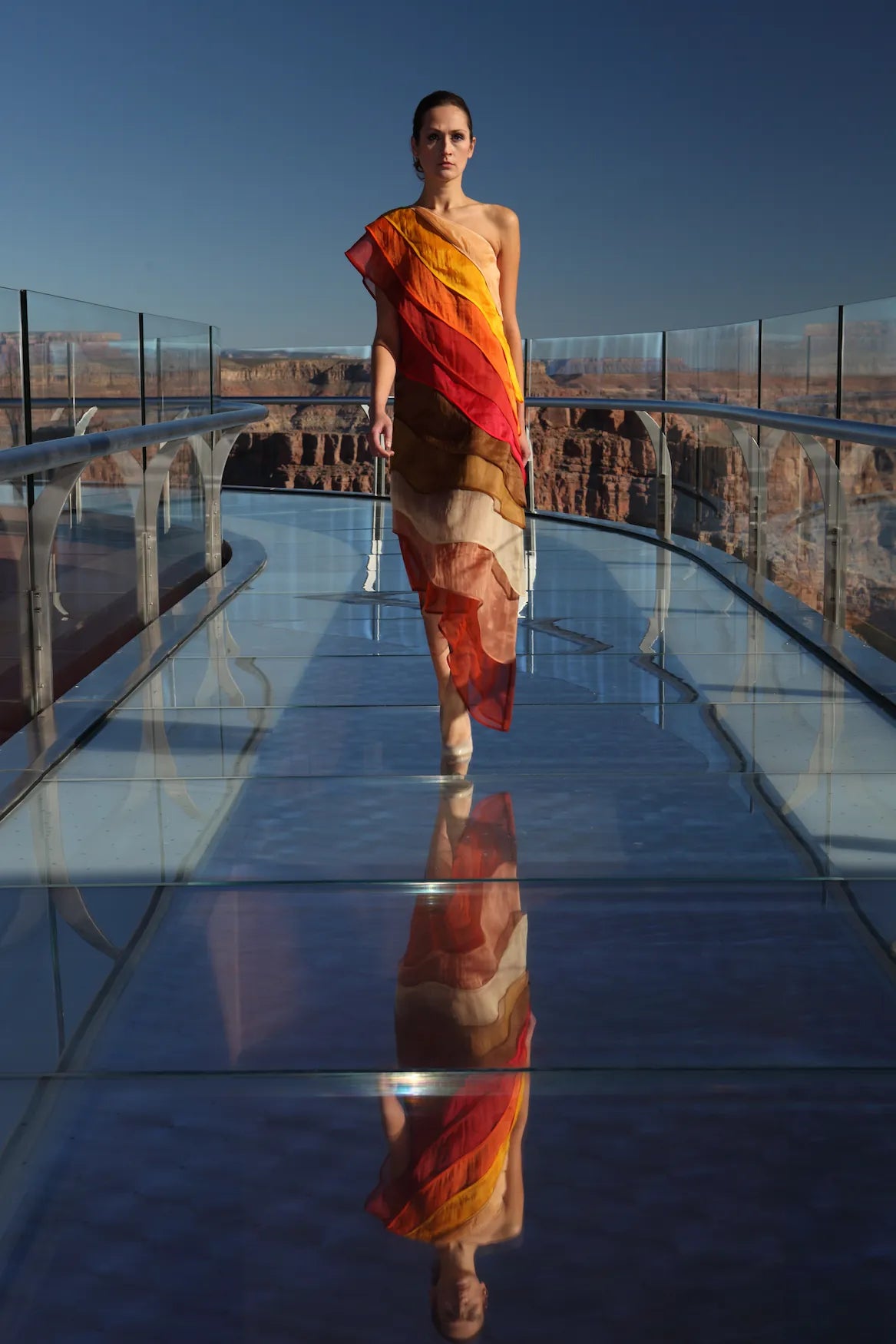
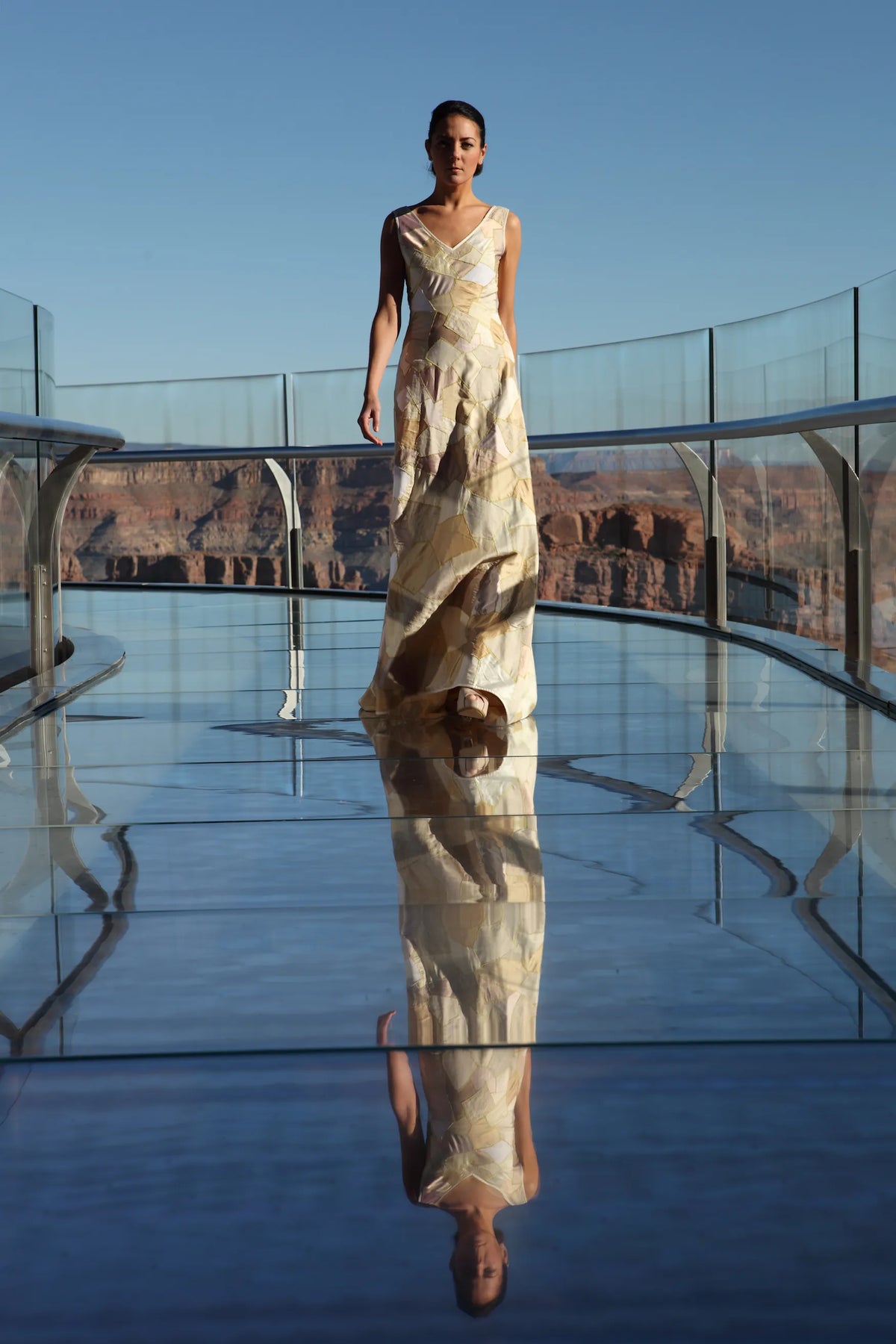
Chula takes part in the world’s highest fashion runway, suspended 1,219 meters above the Grand Canyon. Models walk along the horseshoe-shaped glass bridge, creating the illusion of floating above the canyon's vastness.

For the occasion, Diego designs a collection inspired by the colors and striking forms of the American Southwest, while remaining rooted in Chula’s signature Vietnamese fabrics; this follows the tradition of their previous Japan Collection and France Collection, and which would later be their Hanoi and New York Collections. 

Grand Canyon Sky Walk, 2013

Chula also begins selling at one of Hanoi’s most iconic hotels, the historic Hotel Metropole Hanoi in the Old Quarter, bringing its distinctive designs to one of the city’s most celebrated addresses.

2014

Following their series of shows on striking architectural runways, Chula takes its designs to the 63rd floor of the newly inaugurated One World Trade Center. For the occasion, Diego creates a collection inspired by American graphism, architecture and pop culture, bringing his distinctive visual language to New York.

New York City One World Trade Center, 2014

Chula opened its first boutique outside Hanoi in the World Heritage city of Hoi An, in central Vietnam. Set beside the river rather than the lake, the traditional two-story Hoi An house shared the sense of calm and retreat that they had first found in Chula Tay Ho, away from the town center. Like the Hanoi house, the upper floor was kept as a living space, welcoming friends, collaborators, and visitors who came to stay.

Chula Fashion House, Hoi An

Diego and Laura were recognized as part of “100 Españoles,” an initiative by the Fundación Fusionarte celebrating the trajectories of one hundred Spanish citizens living and working abroad.

2015

01 / 05

Chula celebrates its 10th anniversary with a love letter to the city it calls home. The collection Chula Loves Hanoi draws inspiration from the capital’s symbols: the architectural icons of Long Biên Bridge and the Hanoi Flag Tower, but also from ordinary details of everyday life, from bustling streets and tangled cables to kumquat trees. 

To mark its 10th anniversary, Chula opens a store in Ho Chi Minh City. 

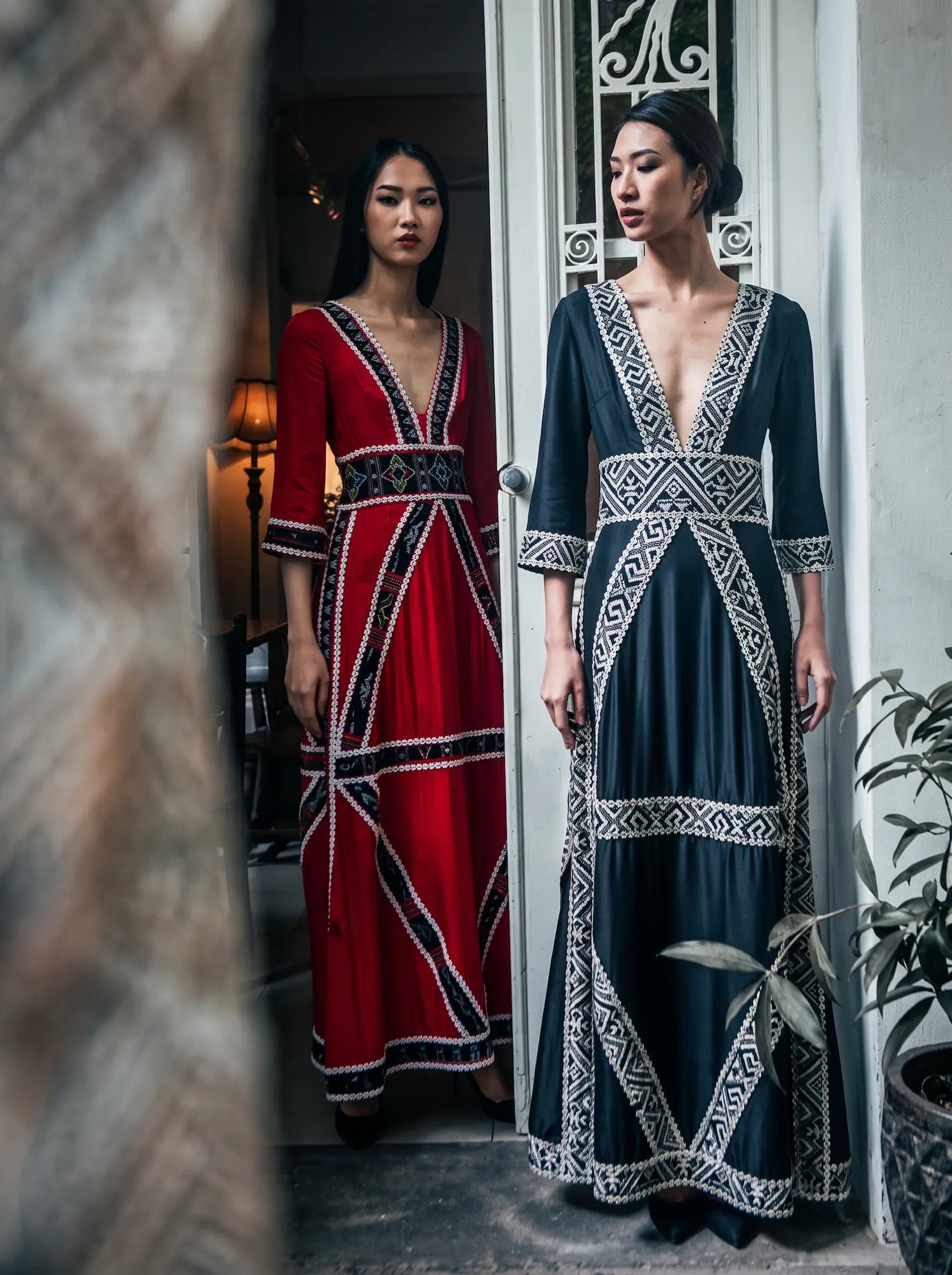
Chula released Lost in the Market, a collection that marked a shift towards looser, more breathable, and accessible clothing. Drawing on the colors, textures, and materials in Vietnamese markets, and the bright Sapa lace,  a material that had by then become a recurring element across Chula's clothes, objects, and decoration.

In collaboration with the Vietnamese Ministry of Culture, Chula takes audiences on a journey through several countries, showcasing contemporary Vietnamese creativity on the international stage.

The Trajan’s Market in Rome, the Rotes Rathaus in Berlin, the United Nations Headquarters in New York, and the Kennedy Center in Washington, D.C., become backdrops for Chula’s vision of contemporary Vietnam.

2016

Chula opens its fourth store, its second in Hanoi, in the heart of the capital’s Old Quarter, beside St. Joseph’s Cathedral. That year, Diego and Laura work with their dear friend Nguyễn Thảo Vân and the Will to Live Center (Nghị Lực Sống). Under the motto “I am beautiful, you too,” they support a fashion show where people with disabilities take their place both on the catwalk and behind the scenes, from presenting the collections to helping produce the event. More than a fashion show, it becomes a celebration of diversity and a statement that there should be a place for everyone in fashion.

2022

Add 2022's story

Placeholder — replace with this year's story in the theme editor.

2023

Add 2023's story

Placeholder — replace with this year's story in the theme editor.

2024

Add 2024's story

Placeholder — replace with this year's story in the theme editor.

2025

Add 2025's story

Placeholder — replace with this year's story in the theme editor.

2026

Add 2026's story

Placeholder — replace with this year's story in the theme editor.